ServicesBattery Storage
Battery Storage in West Jordan
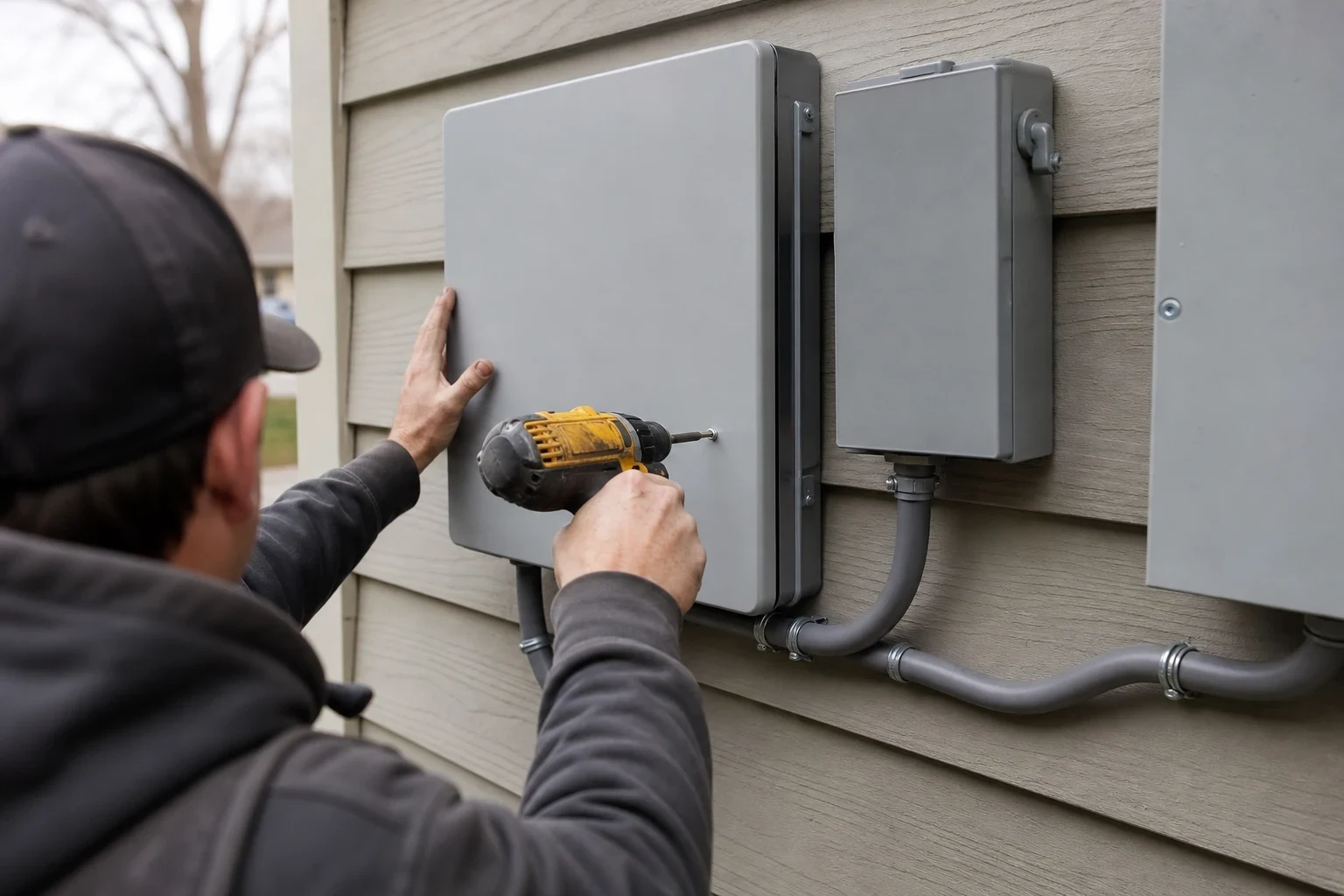
We add home batteries that store your solar power for the evening and keep chosen circuits running when the grid drops. We size the battery to your actual loads, explain each part we install, and help you document the system for your homeowner's policy.
What a Home Battery Does for You
A battery does two jobs. It stores the solar power your panels make at midday so you can use it after sunset instead of sending it to the grid for a lower export credit and buying it back later at the full rate. And when the utility goes down, a transfer device isolates your home from the grid so the battery can keep your fridge, furnace blower, well pump or internet running.
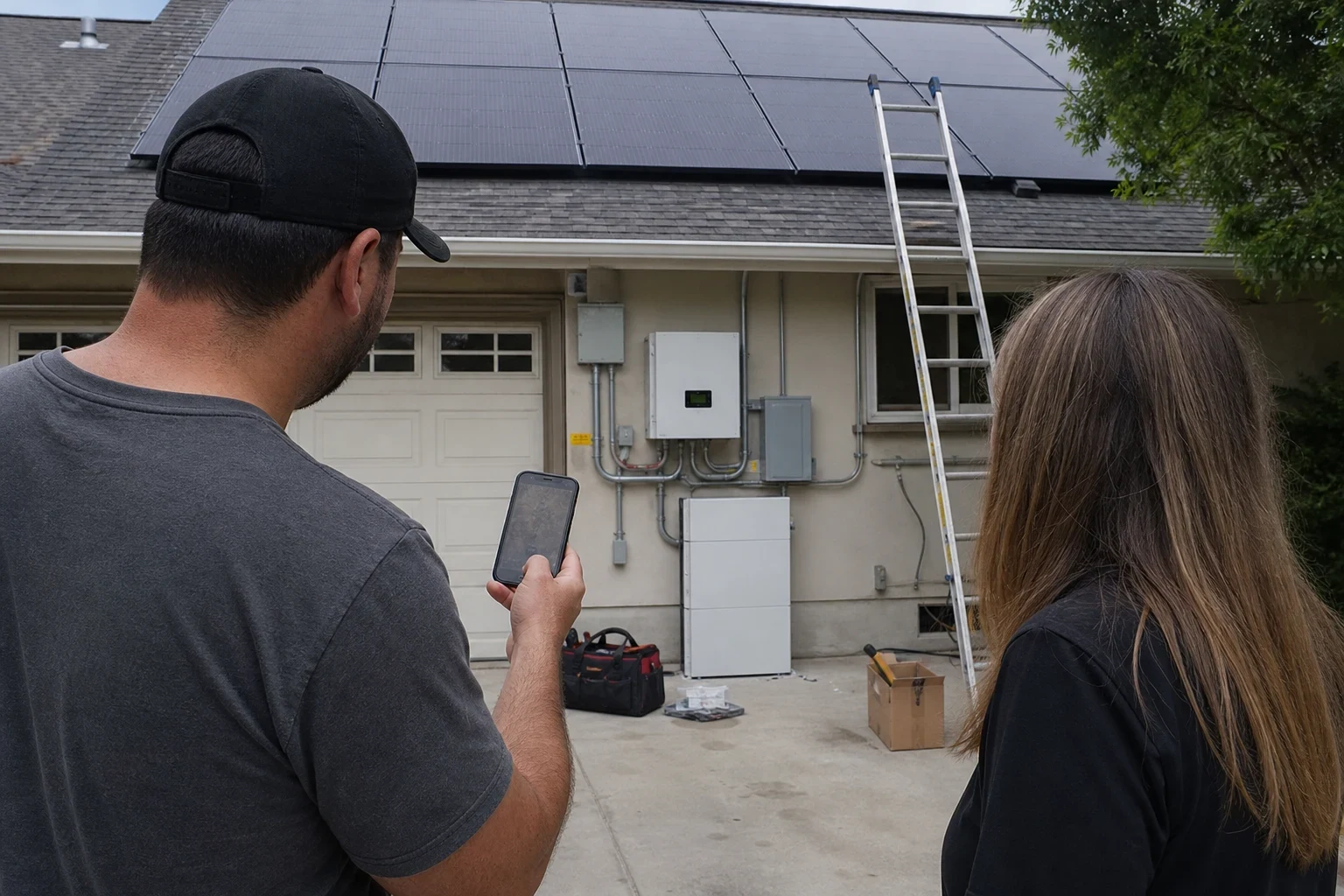
Most of the batteries we install use lithium iron phosphate (LFP) cells. That chemistry is more thermally stable than older lithium designs and holds up well over thousands of charge cycles. We mount them in the garage or on a shaded exterior wall, since cell temperature affects how fast a battery can charge on a cold winter morning.
A battery is also equipment you will want listed on your homeowner's policy. We give you the model numbers, serial numbers and photos of the finished install so that, if a storm or fire ever leads to a claim, you already have the paperwork your insurer asks for.
What the Battery Work Includes
- 01
Load review
We go through your circuits with you and pick what needs backup. A fridge and furnace fan draw far less than a central air conditioner or electric range, and that choice drives battery size more than anything else.
- 02
AC- or DC-coupled design
If you already have solar, we usually AC-couple the battery so your existing inverter stays in place. On new systems, a hybrid inverter can DC-couple the panels and battery and avoid an extra conversion step.
- 03
Backup gateway and critical loads panel
We install the transfer switch or gateway that separates your home from the grid during an outage. Where whole-home backup is not practical, we move selected circuits to a dedicated critical loads subpanel.
- 04
Permit, inspection and interconnection filing
The electrical permit is on us, along with booking the inspector and sending your utility the revised interconnection application that adds storage to your system. We are licensed in all states served, and each battery is wired to the current electrical code for energy storage systems.
- 05
Commissioning and app setup
We set the operating mode, whether that is backup reserve, self-consumption or time-of-use shifting, and show you how to read state of charge and power flow in the monitoring app.
Questions about Battery Storage?
Call(801) 346-0573Signs a Battery Makes Sense for Your Home
Your export credits look small
If your bill shows solar power credited at well below what you pay per kilowatt-hour, storing that energy for evening use is usually worth more than exporting it.
Outages hit things you rely on
A medical device, a sump or well pump, a home office, or a freezer full of food all make backup power more than a convenience.
Your solar shuts off when the grid does
Standard grid-tied inverters stop producing during an outage for line-worker safety. Without a battery and gateway, your panels sit idle exactly when you need them.
You are planning solar anyway
Adding storage during a new solar panel installation means one permit, one inspection and one round of wiring instead of two.
How a Battery Install Runs
- 1
Free virtual appointment
We review a recent utility bill, your main panel photos and your outage concerns over video. You come away with a recommended battery size and the circuits it would cover.
- 2
Site check and design
We confirm main panel capacity, busbar rating and the mounting wall. Then we draw the one-line diagram the permit office and utility need.
- 3
Install day
Most installs take one day. Power is shut off for a few hours while we land the gateway between the meter and your main panel, and we tell you in advance so you can plan around it.
- 4
Sign-off and first power-up
Once the inspector signs off and your utility approves the revised interconnection, we commission the battery and open the main breaker with you to simulate an outage. You keep a folder with the permit record, serial numbers and install photos.
What Moves the Cost of Battery Storage
The battery itself is the largest piece, but the electrical work around it can swing the total. We give you a line-item quote by phone after your appointment, and $0 up front options are available. Here is what changes the number.
- Storage capacity
- More kilowatt-hours cost more. Backing up a few essential circuits takes far less storage than running a whole home with central air.
- Panel condition
- An older or undersized main panel may need an upgrade or a main breaker derate before a battery can be added safely.
- Coupling method
- Retrofitting an existing solar array with an AC-coupled battery adds equipment that a new DC-coupled hybrid system may not need.
- Wire run and mounting
- A long conduit run from the battery to the panel, or a location that needs a protective bollard in the garage, adds material and labor.
Battery Storage Questions
How many hours of backup does a battery actually give?
That comes down to the loads you leave on. Keeping a fridge, a few lights, the furnace blower and your router powered can carry you overnight and well into the next day, and your panels start refilling the battery at sunrise. A central air conditioner pulls far more power and shortens that window quickly, so we size the system around the circuits you really use.
Can you add a battery to the solar I already have?
Usually, yes. We check your inverter model and main panel, then AC-couple a battery alongside the existing system in most cases. Some older inverters need a firmware update or a different backup configuration, and we tell you that up front.
Do batteries work in cold weather?
LFP batteries discharge fine in the cold, but charging slows when cells are near freezing. Many units have internal heaters, and an attached garage keeps them in a comfortable range through winter. We factor that into where we mount it.
Will my homeowner's insurance cover the battery?
Many policies cover permanently attached equipment, but limits and terms vary, so we suggest calling your agent once it is installed. We give you photos, serial numbers and the permit record so it can be added to your policy correctly. We are not your adjuster, but we can explain what an insurer typically wants to see if you ever file a claim.
Is a battery safe inside my garage?
LFP chemistry is among the most stable lithium types, and we follow code clearances, ventilation and impact protection for garage installs. The city inspector checks the placement before the system is turned on.
See What a Battery Would Cover
Send us a recent bill and a photo of your electrical panel during a short video call. We will tell you which circuits a battery can carry and what size fits.