ServicesSolar System Add-Ons
Solar System Add-Ons in West Jordan
Your solar system can do more than it did on day one. We add EV chargers, consumption monitoring, electrical panel upgrades and extra panels, and we check your inverter, wiring and breaker space first so each add-on works with what is already on your home.
What an Add-On Changes, and When It Makes Sense
An add-on is any piece of equipment that changes how your solar system produces, measures or uses power after the original install. The common ones are a Level 2 EV charger, a consumption monitor that reads what your home draws, a main service panel upgrade, and more panels to cover a bigger load.
The right call depends on why your energy use changed. A new electric vehicle can add several hundred kilowatt-hours a month. A heat pump or hot tub shifts load into evenings, when your panels make little. Under Utah's current net billing, exported power earns less credit than power you use on the spot, so knowing when your home draws power matters as much as how much the array makes.
We start by reading your existing equipment, not by picking a product. Inverter capacity, breaker space and the bus rating on your main panel decide what you can add without rework.
Add-Ons We Install
Level 2 EV charger
A 240-volt charger on a dedicated circuit, usually 40 or 50 amps. We run a load calculation first, because a charger on a full 100-amp panel can trip the main or force a panel upgrade you did not plan for. Many chargers can be scheduled to run midday, when your panels are producing.
Consumption monitoring
Current transformers clamp around your service conductors and report what your home draws, minute by minute. Paired with production data, you see self-use versus export, which is the number that drives your bill under net billing.
Main panel upgrade
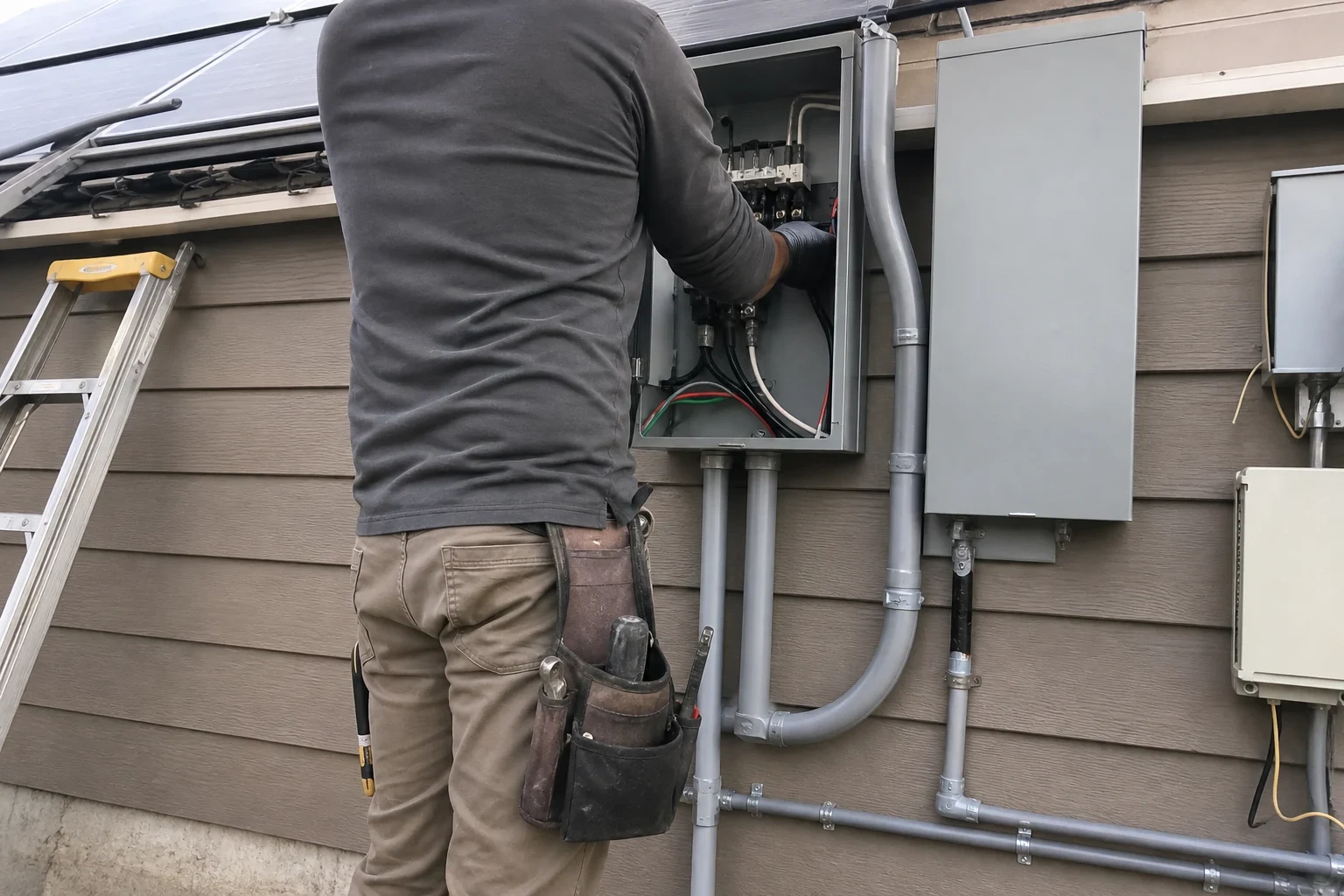
Older 100-amp panels, or 200-amp panels with a 200-amp bus, often cannot take more solar backfeed under the 120 percent rule in the electrical code. Replacing the panel or adding a supply-side connection opens room for more solar, a battery or a charger.
Array expansion
Additional panels on a new string or microinverters, matched to your current modules as closely as the market allows. We confirm inverter headroom and update the utility interconnection so the extra output is counted.
Surge protection
A whole-home surge protective device at the main panel, plus DC-side protection where the design calls for it. Inverters are the most sensitive electronics in a solar system, and summer storms bring nearby lightning strikes.
Signs Your System Needs an Add-On
Your bill crept back up
If your bill is climbing while production looks normal, your load grew. Monitoring shows where it went before you spend money on more panels.
You bought or ordered an EV
Charging on a 120-volt outlet is slow and puts a long continuous load on a circuit not built for it. A dedicated Level 2 circuit is the safer setup.
No open breaker spaces
A panel with every slot filled, or tandem breakers stacked in, leaves nowhere to land a new circuit. That usually points to a panel upgrade or subpanel.
Your app only shows production
Production-only monitoring tells you what the panels made, not what you used. Without consumption data you cannot tell if export credits or self-use are carrying your savings.
How an Add-On Job Runs
- 1
Virtual walkthrough
On a free virtual appointment you show us your main panel, inverter label and recent bills on camera. We note the panel's amp rating, bus rating and open spaces.
- 2
Load calculation and written quote
We size the add-on against your service and existing solar backfeed, then give you a line-item quote. If the panel cannot carry it, we say so up front.
- 3
Permit and utility paperwork
Electrical work needs a city permit, and array expansions need an updated interconnection application with the utility. We file both and schedule the inspection.
- 4
Install day and documentation
Power is shut off only for the panel work, usually part of a day. We photograph every new component, serial number and label, and hand you those records along with the inspection sign-off.
What Moves the Cost of an Add-On
Add-on pricing depends more on your existing electrical service than on the device itself. A charger on a panel with room is a short job, while the same charger on a full panel can mean a service upgrade. We price after the load calculation, so the quote reflects your home rather than a guess, and $0 up front financing is available.
- Panel capacity
- Bus rating, main breaker size and open spaces decide whether new equipment connects directly or needs a panel replacement or supply-side tap.
- Wire run length
- A charger in a detached garage or on the far side of the house needs a longer run of heavier copper or aluminum conductor, plus trenching or conduit.
- Inverter headroom
- Expansions that exceed your inverter's AC rating require a new inverter or added microinverters, not just more modules.
- Permits and utility review
- Interconnection updates and inspections add fees and scheduling time, more for expansions than for monitoring.
Add-On Questions
Something not covered here? (801) 346-0573
Can you add panels to a system another company installed?
Often, yes. We need the inverter model, module specs and the original permit or interconnection documents if you have them. Mismatched modules on the same string can drag output down, so we may put new panels on their own string or on microinverters.
Will an add-on affect my existing warranty?
It can if the work touches the original equipment. That is why we read your current warranty terms before we connect anything. If a change would put a term at risk, we tell you before work starts and look for a connection method that leaves the original inverter and wiring alone where the design allows.
Should I tell my homeowners insurance about new equipment?
Yes. A charger, new panel or added modules raise the replacement value of what is on your home, and an underinsured system can leave a gap after storm or fire damage. We give you dated photos, serial numbers and invoices to send your agent. Your insurer decides coverage, not us.
Who does the electrical work on an add-on?
Our own crew handles it. We hold licenses in all states served, and every add-on goes through the city electrical permit and inspection before it is put into service.
Do I need a battery to use an EV charger with solar?
No. A charger scheduled for midday uses solar output directly. A battery helps if you charge overnight, and our Battery Storage page covers that option.
Find Out What Your System Can Take
Have your main panel door open and a recent bill handy. We will read the ratings with you and tell you plainly which add-ons fit.