ServicesSolar Panel Repair
Solar Panel Repair in West Jordan
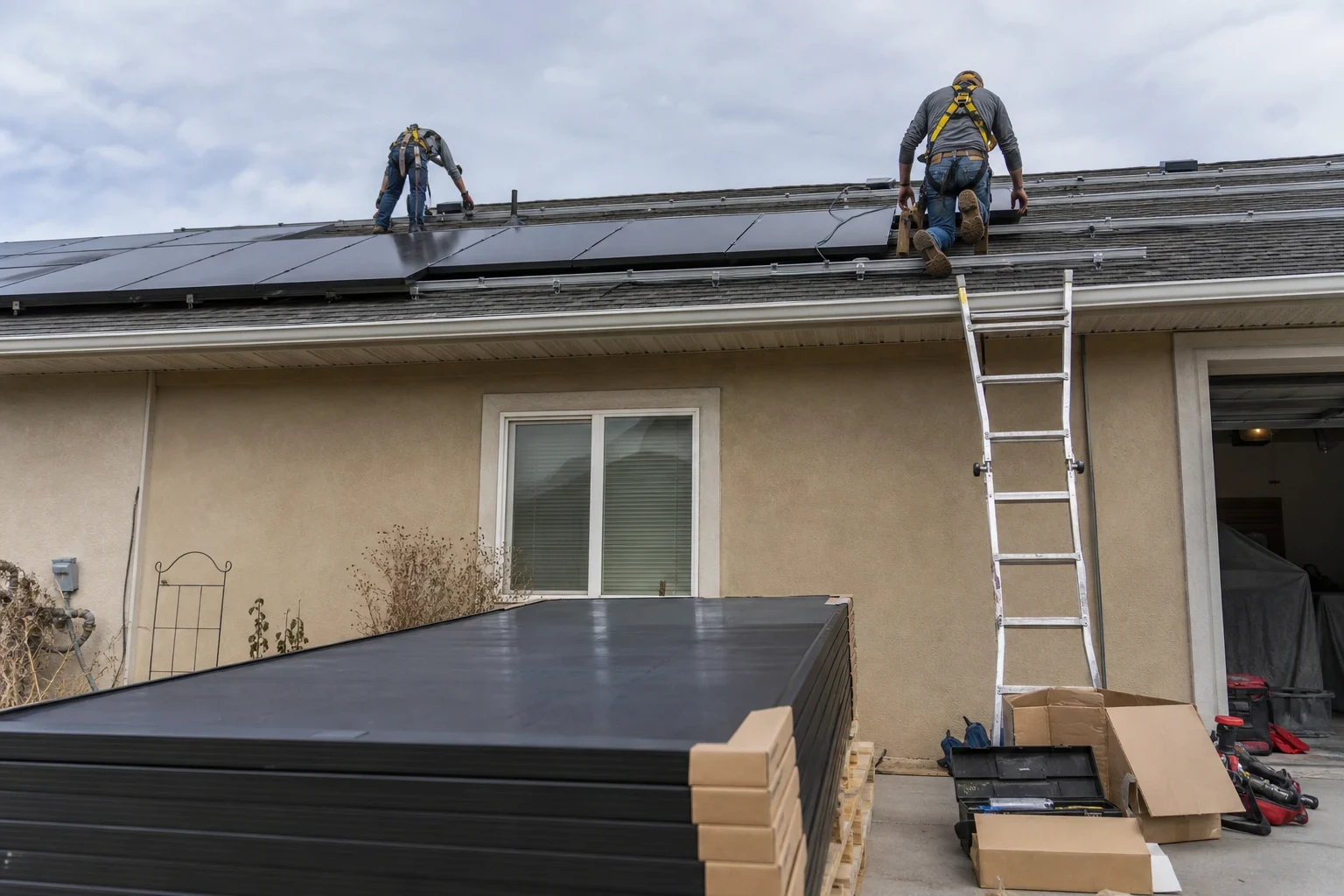
When your production drops or a storm cracks a module, we find the exact part that failed and repair it. We photograph and log the damage so you have clear records if you file an insurance claim, and we tell you plainly what we can and cannot promise.
Finding the Fault Before Anyone Replaces Anything
A solar array rarely fails all at once. One module stops producing, a connector corrodes, or an inverter starts throwing ground-fault codes. Your monitoring app shows a dip, and the rest of the system hides the problem by carrying on. Repair starts with finding which component is actually responsible, because swapping parts on a guess wastes money.
Hail is a common cause here. Sometimes the tempered glass cracks where you can see it. Other times the glass stays clear while the silicon cells below it fracture, and production slips a little more each month. Winter freeze and thaw then works moisture into those weak points. We test before we judge, and we record what we find so it holds up later.
Our company is licensed in all states served, and the same crew that diagnoses the problem does the repair.
What a Repair Visit Covers
- 01
Production and error-code review
We pull your monitoring history and inverter logs to see when output changed and which string or module dropped. A sudden drop after a storm points somewhere different than a slow decline over a year.
- 02
Electrical testing at the string and module
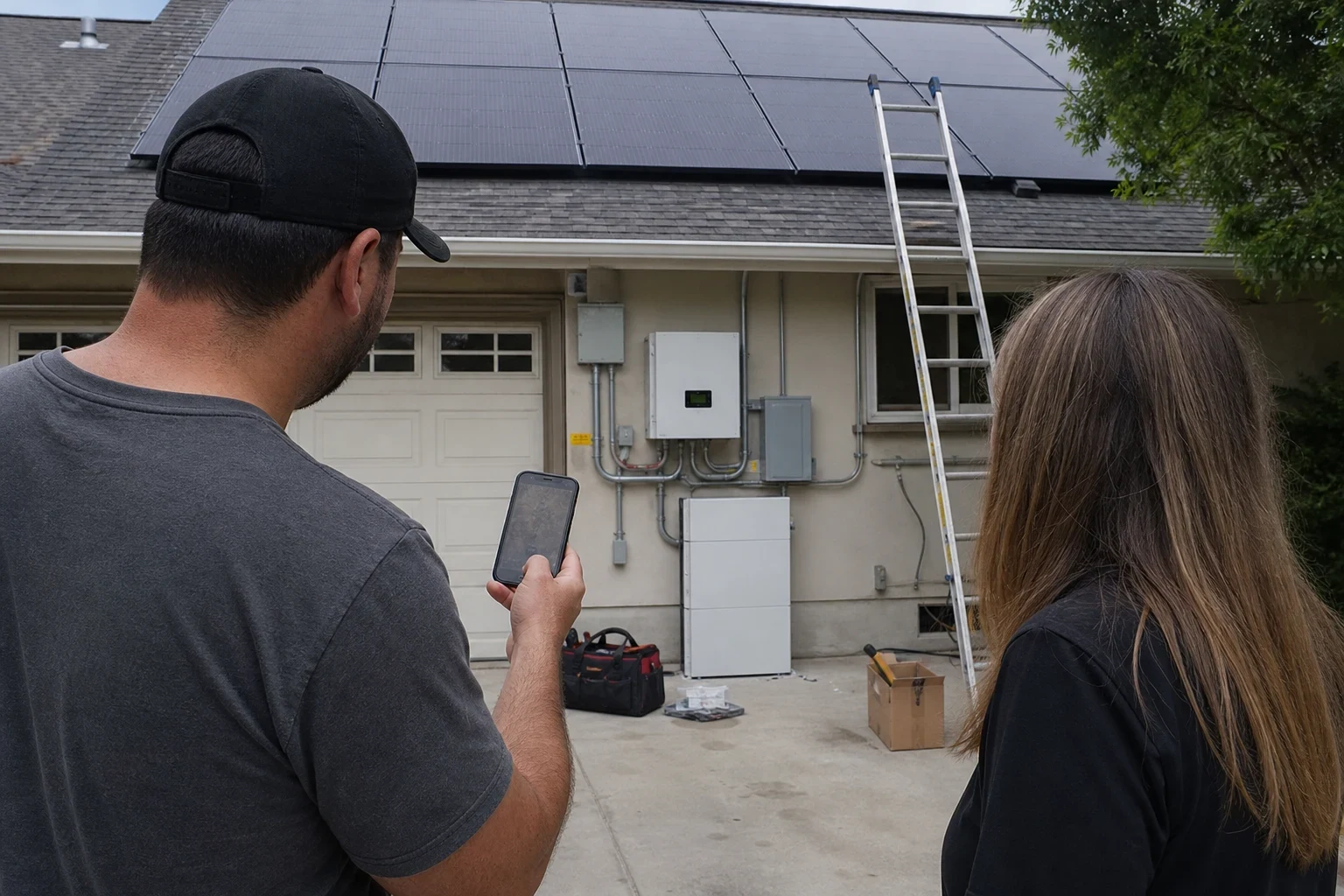
Each string gets a meter on it for open-circuit voltage and operating current, and we check those numbers against the rated values on the module datasheet. When a string comes up one module short, the usual causes are a failed bypass diode, a burned junction box or an open connection.
- 03
Thermal and visual inspection
A thermal camera shows hot spots from cracked cells or failing diodes that the eye misses. We also look for delamination, browned EVA encapsulant, backsheet cracks and the thin gray lines called snail trails that often follow microcracks.
- 04
Wiring, connectors and grounding
MC4 connectors that were mismatched or never fully seated can arc and melt. We check them along with conduit, grounding lugs, racking clamps and any wiring chewed by rodents.
- 05
Damage documentation
Every finding gets a dated photo, a reading and a short note on the likely cause. You get the full set to share with your insurer or the panel manufacturer.
- 06
The repair itself
Replacing a module, microinverter, optimizer, connector or damaged run of wire, then retesting the string so you can see output come back on your app.
Questions about Solar Panel Repair?
Call(801) 346-0573Signs Your Panels Need a Repair Visit
Output dropped and stayed down
Compare a clear day this month with a clear day at the same time last year. A drop of more than a few percent that does not recover is worth testing.
One panel reads low or zero
With microinverters or optimizers, the app shows each module. A single panel at zero often means a failed microinverter or a disconnected lead.
Visible cracks after a hailstorm
Shattered or spiderwebbed glass lets water reach the cells. Stop using the damaged area as a reference point and photograph it before anything is moved.
Inverter fault lights or codes
Ground-fault and isolation errors usually trace to damaged insulation or wet connectors. They tend to come and go with weather, which makes them easy to ignore.
Discoloration or bubbling on the panel face
Brown or yellow patches and lifted layers mean the encapsulant is breaking down, and that module is losing output.
How a Repair Runs
- 1
Free virtual appointment
On the call, we look at your monitoring data and any photos you have taken. Many problems narrow down to one string or one device before we ever come out.
- 2
On-site diagnosis
We isolate the system safely, then test strings and modules and run the thermal scan. You get photos and readings for each finding.
- 3
Written repair plan
We list each part, the reason it failed and the repair cost line by line. If the damage looks storm-related, we say so and explain what an adjuster will usually want to see, without telling you what your policy will pay.
- 4
Repair and retest
We replace the failed parts, torque connections to spec, and retest every affected string. We clean up packaging and old parts before we leave.
What Moves the Cost of a Repair
Most repair cost comes from two things: which part failed and how hard it is to reach. A single loose connector is a small job. A run of hail-cracked modules is a larger one. We price after testing, not before.
- The failed component
- A connector or fuse costs far less than a module, microinverter or string inverter.
- Matching replacement modules
- Older panel models may be discontinued. A replacement must match electrically closely enough not to drag the string down, which can limit choices.
- Access to the array
- Panels in the middle of a row take longer to remove and reinstall than ones on an edge.
- Extent of storm damage
- Hail damage often covers more modules than the obvious cracked ones. Testing for microcracks adds time but prevents a second repair.
Solar Panel Repair Questions
Does a homeowners policy pay for hail-damaged solar panels?
An array bolted permanently to your home is often covered like the rest of the structure. Whether yours is covered depends on your policy wording and your deductible. We cannot make that call or stand in for your adjuster. We can hand you dated photos, test readings and a line-item repair estimate, which is the evidence most adjusters look for.
Should I file a claim before you come out?
You can call your insurer first, and some prefer that order. Either way, take your own photos right after the storm and leave damaged panels where they are. Our documentation can then back up the claim.
Can a panel that looks fine still be damaged?
Yes. Hail can fracture cells beneath glass that shows no mark. Those fractures show up as hot spots on a thermal scan or as weak current on the string, and they tend to spread over time.
Do you repair systems another company installed?
Yes. We work with common module, microinverter and string inverter brands. Having the original equipment list helps us source matching parts.
Is it better to repair or replace the whole system?
Usually repair. If many modules are failing and the system is old, replacing it through our solar panel installation service can make more sense, and we will show you the numbers both ways.
Find Out What Failed and Why
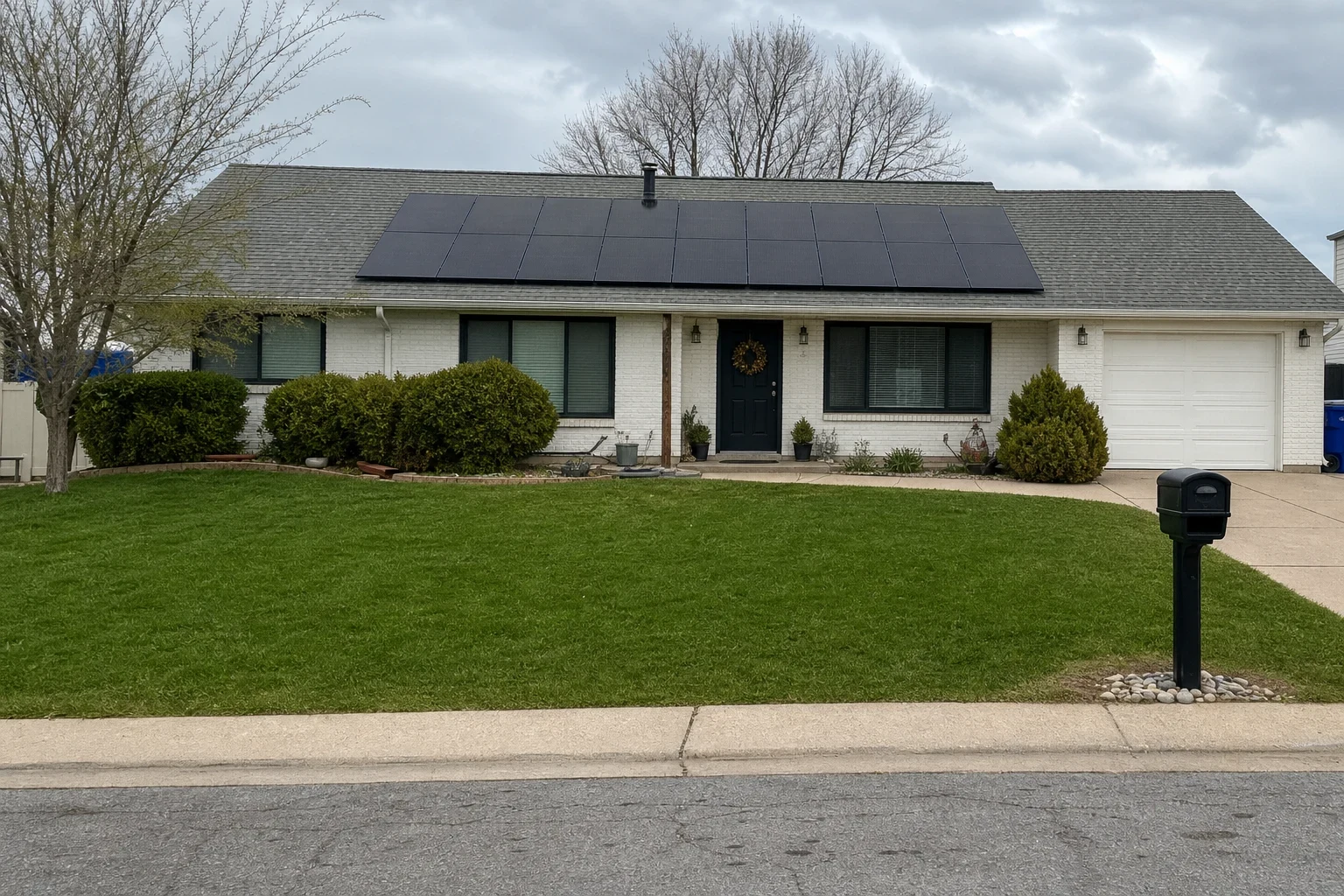
Send us your monitoring data on a free virtual appointment and we will help you narrow down the cause. We serve West Jordan, South Jordan, Riverton and nearby towns.